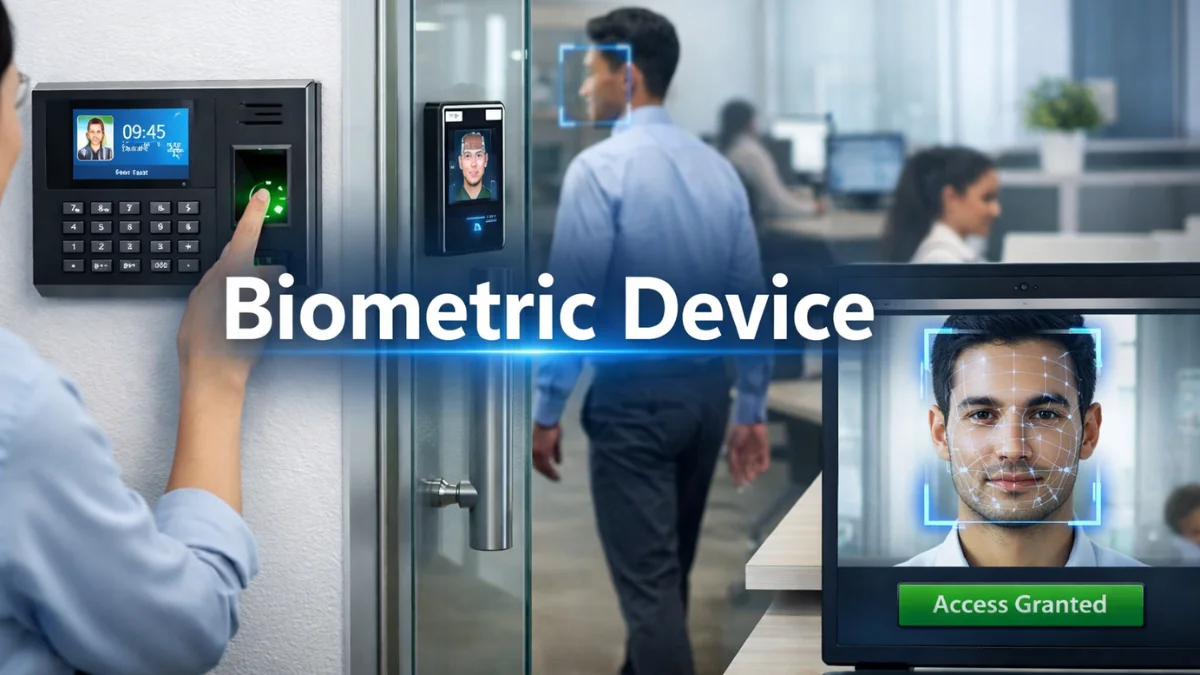
-In today’s digital age, security and identity verification have become more important than ever. From unlocking our smartphones using fingerprints to marking attendance at workplaces through face scans, biometric devices are everywhere. They help verify identity based on unique biological traits, making security more accurate, faster, and reliable.
Biometric devices are now used in:
- Offices & companies
- Schools and colleges
- Airports & government departments
- ATM security & banking
- Hospitals & hotels
If you are planning to understand or buy a biometric-device, this blog will guide you in simple language.
What is a Biometric Device?
A biometric device is a security or identification device that scans unique physical or behavioral characteristics of a person to verify their identity.
These characteristics can include fingerprint, face, iris, voice, or even DNA patterns.
In simple words:
➡️ It checks who you are instead of what you know (password/PIN) or what you have (ID card).
Key Points to Remember
- Biometrics help avoid fraud and unauthorized access.
- They are faster and more reliable than manual systems.
- They reduce identity theft, proxy attendance & password hacks.
How Does a Biometric Device Work?
Biometric devices follow a smart scanning and matching process:
- Capture Data – Scan fingerprint/face/iris/voice.
- Convert to Digital Information – Data becomes an encrypted template.
- Match with Database – System compares it with the stored identity.
- Grant or Deny Access – If matched → Access granted, else rejected.
Important: These devices don’t store actual fingerprint photos; they store encrypted data templates, making them safe & privacy-friendly.
Types of Biometric Devices
Biometrics are mainly divided into physical (physiological) and behavioral recognition systems.
1️⃣ Fingerprint Biometric Devices
Most common & affordable. Used in offices, schools, and small businesses.
👉 Example: Thumb attendance machine
2️⃣ Face Recognition Devices
Scans facial patterns; suitable for touchless attendance.
Best for hospitals, factories & sensitive locations.
3️⃣ Iris or Retina Scanners
High-security devices used in government centers, research labs & airports.
4️⃣ Voice Recognition Systems
Used in banking, customer service verification, and mobile authentication.
5️⃣ Signature & Typing Pattern Devices
Used for document verification and fraud prevention.
Where Are Biometric Devices Used?
Biometric devices are transforming industries with accurate identification. Some common usage areas include:
| Sector | Usage |
|---|---|
| Corporate Offices | Attendance & access control |
| Schools & Colleges | Student attendance, staff monitoring |
| Banks & ATMs | KYC, secure cash withdrawal |
| Airports & Travel | Immigration & security checks |
| Factories | Worker tracking & shift management |
| Hospitals | Patient ID & staff access |
| Hotels | Room access & check-in |
Advantages of Biometrics
✔️ Highly Secure – Unique identity, no duplication
✔️ Faster Authentication – Saves time & improves workflow
✔️ Cost-Effective – Reduces paperwork & manual monitoring
✔️ No Password Required – Forget the tension of lost passwords
✔️ Eliminates Proxy Attendance – Genuine attendance record
Disadvantages / Challenges
⚠️ Performance issues with dirty/damaged fingers in fingerprint devices
⚠️ Privacy concerns if data is not encrypted properly
⚠️ Higher initial cost for advanced face/iris devices
However, with properly secured systems and modern technology, most of these challenges are well-managed.
Tips to Choose the Right Biometric
When buying a biometric device, consider these factors:
📌 Number of users & daily scans
📌 Cloud storage & mobile app support
📌 Integration with payroll software
📌 4G/WiFi availability for remote sites
📌 Support & warranty from the brand
Popular Brands in India: CP Plus, Hikvision, Realtime, Mantra, ZKTeco, ESSL, Hifocus, Timewatch.
Conclusion
A biometric device is no longer a luxury; it’s an essential tool for any organization serious about security and efficiency. Whether for attendance, access control, business management, or personal use, biometrics deliver accuracy, speed, and unmatched security. With the right selection and setup, biometric systems can save time, prevent fraud, and build a modern, secure workplace.
FAQ (Frequently Asked Questions)
Q1. What is a biometric device in simple words?
A biometric device identifies a person based on their unique physical traits like fingerprint or face.
Q2. Are biometric devices safe for privacy?
Yes, if the system uses encrypted data and a reputable brand, it is generally safe.
Q3. Which biometric device is best for office attendance?
Fingerprint devices are budget-friendly; face recognition devices are best for touchless & high-traffic areas.
Q4. Can biometric devices work without the internet?
Yes, but features like cloud reports and mobile access require internet or WiFi.
Q5. What is the price range of a biometric machine?
Starting from ₹2,500 to ₹30,000+, depending on features and technology.
Latest Post
- CCTV Cameras Can Be Hacked: How to Secure Your CCTV in 2026
- India’s CCTV Market Is Changing—Here’s What It Means for Hikvision, Dahua and Indian Brands
- Guanlan Encoding by Hikvision – Features, Benefits & Complete Guide (2026)
- HikTech Star Show 2026 – Complete Guide, Benefits, Registration & Tips
- Plugins for Eco Series – Download, Install & Fix Plugin Issues